2023 Social Protection Budget Brief
By UNICEF · 24 December 2023
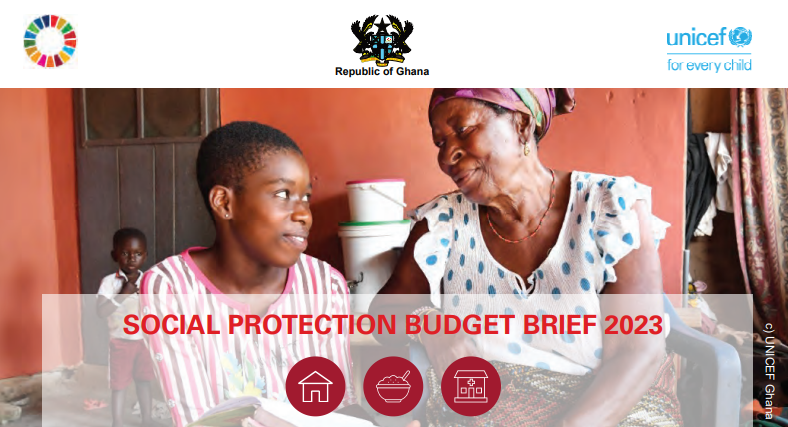
Social protection helps vulnerable people to cope with crises and shocks, provides support to the poorest members of society to alleviate extreme poverty and destitution, and ensures people’s welfare across their entire lifecycle. The Government of Ghana (GoG) has declared its steadfast commitment to achieving the SDGs1, which include the eradication of extreme child poverty, and halving the number of children living in poverty, in all its dimensions.
More Newsletters and Briefing Notes
SWA-Climate-Resilient WASH - Definition Paper [ENG]
Climate-resilient water, sanitation and hygiene services anticipate, respond to, cope with, recover from, adapt to or transform based on climate-related events and trends - all while striving to achieve and maintain universal and equitable access to safely managed services, minimizing emissions where appropriate, and paying special attention to the most exposed and vulnerable groups.
22 Apr 2026
GHANA STATISTICAL SERVICE DP PLATFORM NEWSLETTER Quarter 1 2026
The first three months of 2026 brought a steady stream of economic data from the Ghana Statistical Service (GSS), providing fresh insights into consumer and producer prices, economic activity, and movements in building costs.
05 Apr 2026
From Commitments to Action: Financing Equitable WASH Services in Ghana.
The briefing note, highlights a critical funding shortfall in Ghana's Water, Sanitation, and Hygiene (WASH) sector. While nominal GHS expenditure has risen, real investment in USD was cut nearly in half between 2019 and 2022 due to inflation, national debt, and currency depreciation, causing sector expenditure as a share of GDP to fall from 2.67% to 1.39%. Funding is heavily skewed toward urban areas and water supply (58%), leaving rural communities, Water Resources Management (at 0.1%), and sanitation/hygiene severely underfunded—well below the international 0.5% GDP Ngor Commitment benchmark. Furthermore, households bear 80% of total sector costs through tariffs and self-supply, placing a heavy burden on poorer families. To achieve universal basic access by 2030, the document calls on the government, donors, NGOs, and the private sector to bridge the annual ~$500 million funding gap, ring-fence funds for underfunded sub-sectors, and prioritize resource allocation toward rural areas and deprived regions like the Northern, Upper, and Oti regions.
25 Feb 2026
084-202505[Briefing Note WASH Financing]04
084-202505[Briefing Note WASH Financing]04 — a WASH sector resource shared by RCN Ghana.
11 Nov 2025