What is the Tripartite Partnership (TPP) Project?
By RCN Ghana · 02 October 2008
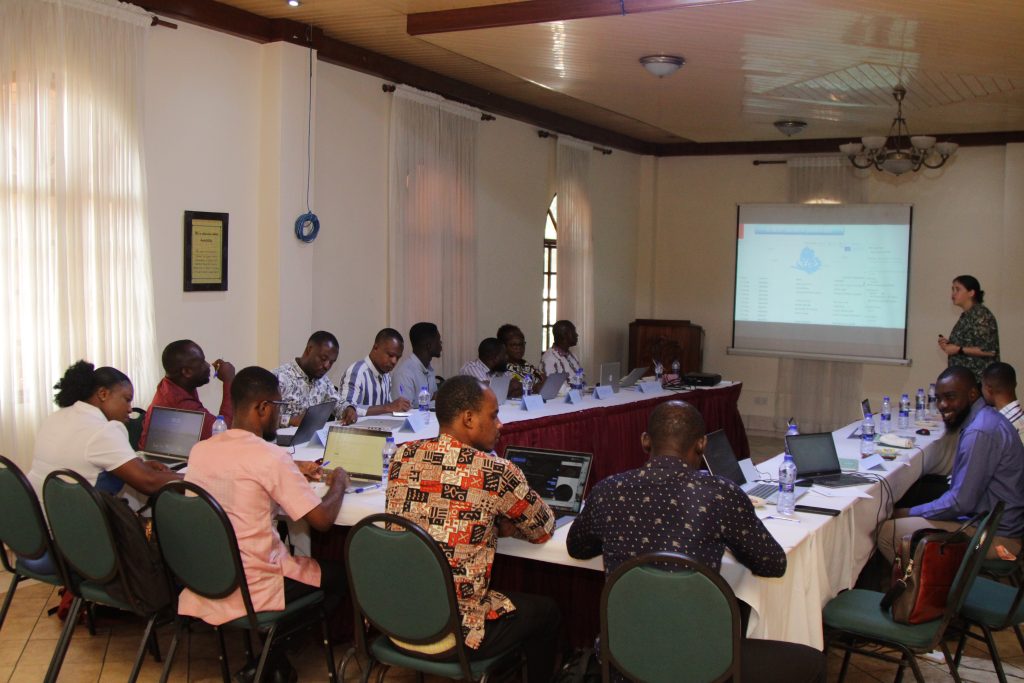
The Tripartite Partnership (TPP) Project is a three-year collaborative approach involving Ghanaian and Dutch partners that aims at developing innovative management models for delivering water suply services to the urban poor in Ghana.
The Tripartite Partnership (TPP) Project is a three-year collaborative approach involving Ghanaian and Dutch partners that aims at developing innovative management models for delivering water, sanitation and hygiene services to the urban poor in Ghana.
In Ghana the poor constitute between 40-70% of the urban population in most cities. Poor urban settlements are often informal and unplanned and are often not covered by city mains. Water and sanitation are unreliable, inaccessible and oversubscribed. These communities mostly meet their water needs mainly through intermediaries – yard taps, community outlets; vendors etc and buy by the bucket at rates up to 15 times the recommended tariffs. Often sanitation is characterised by poorly maintained communal toilets, unimproved on-site latrines, poor drainage and wastewater disposal.
The TPP seeks to develop knowledge on innovative management models in recognition of the fact that
(i) Problems of WASH services delivery are multi-sectoral in nature and the complexity of problems means simple public private partnership (PPP) models are not enough in creating an enabling environment for pro-poor service delivery. Instead multi-stakeholder partnerships that recognise the roles of Local Authorities, NGOS, CBOs are more feasible; and
(ii) Currently, some projects that seek to develop new approaches for WASH services delivery in poor urban areas have started through the effort of organizations like PURC, AVRL and WaterAid.
The key sector challenge is to document experiences, develop more innovative approaches through pilot projects and use new knowledge to develop knowledge products, tools and strategies that could be applied at scale.
The objectives of the project are twofold:
(i) To identify and t…
The Tripartite Partnership (TPP) Project is a three-year collaborative approach involving Ghanaian and Dutch partners that aims at developing innovative management models for delivering water, sanitation and hygiene services to the urban poor in Ghana.
In Ghana the poor constitute between 40-70% of the urban population in most cities. Poor urban settlements are often informal and unplanned and are often not covered by city mains. Water and sanitation are unreliable, inaccessible and oversubscribed. These communities mostly meet their water needs mainly through intermediaries – yard taps, community outlets; vendors etc and buy by the bucket at rates up to 15 times the recommended tariffs. Often sanitation is characterised by poorly maintained communal toilets, unimproved on-site latrines, poor drainage and wastewater disposal.
The TPP seeks to develop knowledge on innovative management models in recognition of the fact that
(i) Problems of WASH services delivery are multi-sectoral in nature and the complexity of problems means simple public private partnership (PPP) models are not enough in creating an enabling environment for pro-poor service delivery. Instead multi-stakeholder partnerships that recognise the roles of Local Authorities, NGOS, CBOs are more feasible; and
(ii) Currently, some projects that seek to develop new approaches for WASH services delivery in poor urban areas have started through the effort of organizations like PURC, AVRL and WaterAid.
The key sector challenge is to document experiences, develop more innovative approaches through pilot projects and use new knowledge to develop knowledge products, tools and strategies that could be applied at scale.
The objectives of the project are twofold:
(i) To identify and t…