Newsletters and Briefing Notes

PRIORITY ACTIONS TO ADDRESS KEY CHALLENGES FOR MENSTRUAL HYGIENE MANAGEMENT
Menstrual Hygiene Management (MHM) practices vary significantly based on culture, wealth, education, water and sanitation access, and product availability. The Ghana WASH Sector Development Programme (GWASHSDP) identifies the key challenges associated with MHM and the priority actions needed to address them and agencies responsible for some of these priority actions. This brief presents priority actions to address the identified challenges for MHM.
08 Oct 2024
WASH NEWS MOLE 34
02 Oct 2024
2023 Education Budget Brief
Education is fundamental to the social, civic, and economic development of children and broader society. It has been described by the UN SecretaryGeneral as “the single most important investment that any country can make for its future and its people”. President Nana Akufo-Addo was announced as a Global Partnership for Education champion for domestic financing for education in October 2022, and called for the allocation of at least 20% of national budgets to education.
24 Dec 2023
2023 Health Budget Brief
Ghana has shown consistent commitment and made significant progress in achieving universal health care and increasing access to essential health services. The Government of Ghana’s (GoG) commitment is reflected in national policies, including the Health Sector Medium Term Development Plan 2022-2025, Ghana’s Roadmap for Attaining Universal Health Coverage 2020-2030, and international commitments, including the Abuja Declaration and UHC2030.
24 Dec 2023
2023 Social Protection Budget Brief
Social protection helps vulnerable people to cope with crises and shocks, provides support to the poorest members of society to alleviate extreme poverty and destitution, and ensures people’s welfare across their entire lifecycle. The Government of Ghana (GoG) has declared its steadfast commitment to achieving the SDGs1, which include the eradication of extreme child poverty, and halving the number of children living in poverty, in all its dimensions.
24 Dec 2023
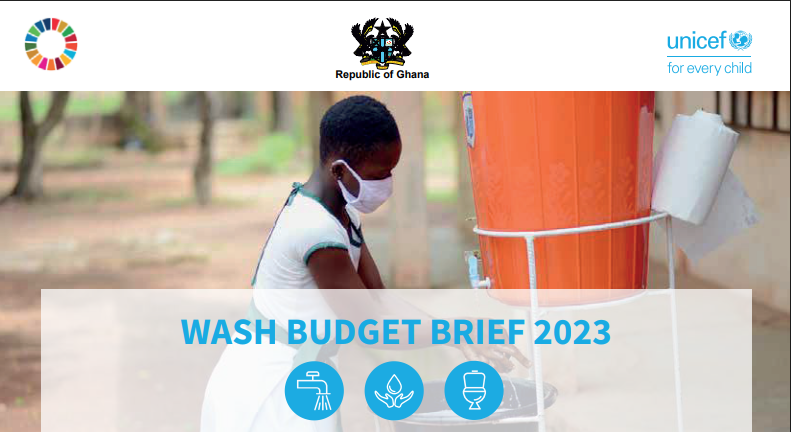
2023 WASH Budget Brief
Access to clean drinking water and sanitation are human rights linked to dignity and health of all people, reflected in Sustainable Development Goal (SDG) 6: ‘Ensure availability and sustainable management of water and sanitation for all’. Water, sanitation, and hygiene (WASH) also have important implications for good health and wellbeing (SDG 3), gender equality (SDG 5), and sustainable cities and communities (SDG 11).
24 Dec 2023
Multimodal strategies to hand hygiene in Ghanaian hospitals
and hygiene (HH) is one of the core components of infection prevention and control and is critical for a high quality of care. Multimodal approaches are recommended to strengthen and drive HH systems in healthcare facilities (HCFs). We aimed to assess the extent of implementation of the WHO HH multimodal improvement strategy in HCFs in the Eastern Region of Ghana.
13 Dec 2023
GHANA – WASTEWATER TREATMENT
Due to rapid industrialization, the volume of industrial wastewater released into streams and rivers in Ghana continues to increase. As the first step towards achieving Sustainable Development Goal (SDG) target 6.3, there is a need to assess the quality and quantity of industrial effluents before allowing them to be discharged into the environment.
05 Feb 2023
Monitoring of water and sanitation services within an integrated decentralised monitoring system: experiences from Ghana
Monitoring of water and sanitation services has for a long time been project driven in the developing world. The need for data to inform subnational planning and delivery of quality services has led to the adoption of decentralised integrated monitoring
01 Sep 2021
WASH in Healthcare Facilities in Ghana; Status & National WASH Costed Strategy
03 Jun 2021
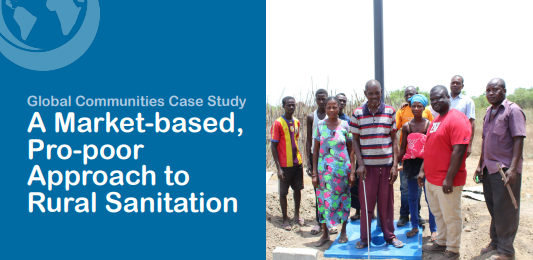
Market-driven Pro-poor Approach to Rural Sanitation
This case study describes the process carried out in Ghana by Global Communities to create an enabling environment for a market-based, pro-poor approach to rural sanitation to address the challenge of open defecation in rural areas and sustaining the behavior of not defecating in the open after a community has been verified as Open Defecation-Free (ODF). This initiative started in 2016 and is an ongoing effort between the USAID WASH for Health project implemented by Global Communities; Duraplast, a Ghanaian plastics manufacturing company; the Government of Ghana; and other rural sanitation stakeholders. The purpose of this learning brief is to describe the initial three-year process (to date) to create an enabling market environment for rural sanitation and to capture emerging lessons.
01 Jun 2020
HSBC Water Programme (WASH in healthcare facilities)
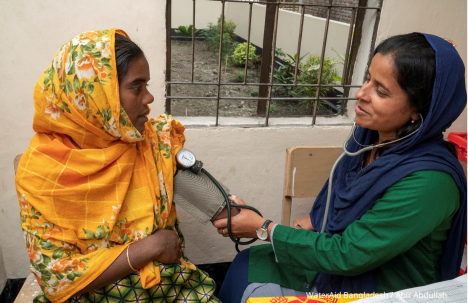
In 2012, HSBC launched its Water Programme to tackle the global water crisis, bringing together the expertise of Earthwatch, WaterAid and WWF to do so. During its eight years, we strengthened clean water, decent toilet and good hygiene systems, changing normal for marginalised communities in six countries: Bangladesh, Ghana, India, Nepal, Nigeria and Pakistan. In the second phase of the programme (HWPII), running from 2017-2019, we also focused on capturing learnings from the programme. A series of learning notes have been produced to inform policy and practice.
13 Jan 2020