Other Publications
IWA-Microbiological Sensors for Drinking Water
There is a long tradition of monitoring the microbiological quality of drinking water during production and distribution stages. Classical microbiological detection methods like plate counts are widely criticized for not being representative compared with the total treated water volume or the loss of time between sampling and availability of the results.
03 Dec 2022
Climate Change Law in Ghana : Analysis of National Legal Frameworks for Climate Action and Development 2022
This legal analysis provides an assessment of Ghana’s key legal and regulatory frameworks for the priorities highlighted in Ghana’s Nationally Determined Contributions (NDCs) and Ghana’s climate agenda more generally. The assessment includes an analysis of gaps or inconsistencies between the Government’s stated climate plans and commitments and existing national policy and legislation, with a view to evaluating the ability of existing legal frameworks to support Ghana’s delivery of its climate commitments and policy goals.
03 Nov 2022
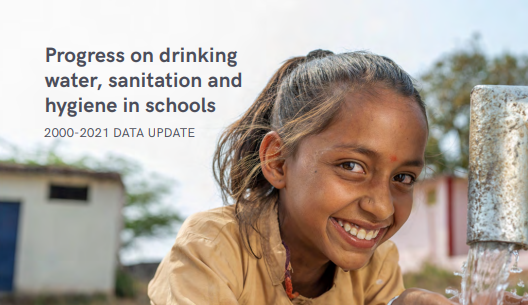
JMP Progress on drinking water, sanitation and hygiene in schools 2022
01 Nov 2022
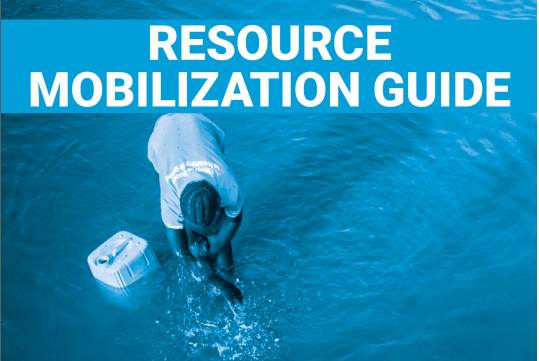
UN Water Resource Mobilization Guide 2022
This Guide maps the funding opportunities for the UN-Water family. It offers a contextualized reading of key official development assistance (ODA) data (water and non-water related) against relevant entry points for UNWater: the size and breadth of donors’ water and sanitation investment commitments, the importance of their overall multilateral aid (including the aid channelled through the United Nations system) and mapping of the donors behind key Sustainable Development Goal (SDG) data/monitoring initiatives (all sectors)
05 Mar 2022
FROM COMMODITY TO COMMON GOOD: A FEMINIST AGENDA TO TACKLE THE WORLD’S WATER CRISIS
No life form on this planet can survive without water. Life on Earth depends on our careful stewardship of this common good. Many of the world’s first inhabitants, and the keepers and protectors of water, often Indigenous women, have long considered water to be a sacred resource with a distinct bond to all life forms. Water, from this perspective, is not a thing to be possessed, but a living entity. It must be protected from environmental damage, waste and pollution and not exploited as a commodity or financial asset.
05 Mar 2022
GHANA 2021 POPULATION AND HOUSING CENSUS GENERAL REPORT Volume 3M Water and Sanitation
Population census is the complete enumeration of all persons in a country at a specified time. It involves the collection, compilation and dissemination of demographic, social and economic statistics relating to the population. The complementary housing census is the complete enumeration of all living quarters (both occupied and vacant) in a country at a specified time. It also involves collection, compilation, and dissemination of statistical data on living quarters and occupants
05 Feb 2022
MTNDPF 2022-2025
This Medium-Term National Development Policy Framework (MTNDPF) 2022-2025 seeks to operationalize Article 36, Clause 1 of Ghana’s 1992 Constitution, which enjoins the government to ensure that the national economy is managed efficiently to maximize the welfare of the citizenry. It was prepared with broad-based stakeholder participation, including the use of cross-sectoral planning groups (CSPGs) as enjoined by Article 15 of the National Development Planning Commission Act, 1994 (Act 479). Public consultations were also undertaken across the country, including engagement with Parliament and the presidency. It was finally approved by the Commission following approval from the presidency and presented to Parliament.
16 Dec 2021
The Sanitation and Waste Management Conundrum in Ghana: The Case for High Level Prioritization and Fiscal Incentives
Inadequate access to environmental sanitation services has been implicated in a number of mortality and morbidity situations all over the world.
11 Jun 2020
NATIONAL GUIDELINES FOR HEALTH CARE WASTE MANAGEMENT IN GHANA
Health care facilities generate different kinds of waste during patient care and daily operations which has the potential to contribute to infections among hospital staff, patients, caregivers, and pollution of the environment
03 Sep 2019
Technical Guide for Sanitation Marketing WVG
Sanitation and hygiene remain a global challenge. Even more threatening are the rural-urban disparities and increasing inequalities in sanitation services. The WHO/UNICEF JMP report (2019 estimates that seven out of ten people who still lacked basic sanitation services lived in rural area and one third lived in the Least Developed Countries. In Ghana, about 25% of the population in urban areas do not have access to basic sanitation in contrast to 17% in rural settings.
29 Apr 2019
Sermon Guide On Water, Sanitation and Hygiene (WASH) For Christian Leaders
The WASH Sermon Guide seeks to increase the capacity of the key stakeholders (Christian leaders, FBOs) in the WASH Sector to realize their child and community wellbeing outcomes. The target group is Christian leaders and other faith based leaders. The rationale is that Christian and other faith based leaders have power and influence which can be leveraged to promote good WASH practices in the constituencies and communities they serve.
14 May 2017
Cholera Prevention and Control: Lessons Learnt 2014 – 2015 and Roadmap
This report contains a summary of lessons learnt and a Road Map for the implementation of recommendations endorsed at the validation workshop. This is a part of an assignment titled “Cholera Prevention and Control: Lessons Learnt 2014 – 2015 and Roadmap” in a bid to address the almost yearly outbreak of cholera by the Government of Ghana, with support from key partners such as UNICEF.
02 Mar 2016