Other Publications
Africa Water Vision 2063 and Policy
Africa Water Vision 2063 and Policy — a WASH sector resource shared by RCN Ghana.
18 Feb 2026
Progress on drinking water, sanitation and hygiene in schools 2015 - 2025
WHO/UNICEF joint monitoring programme for water supply, sanitation, and hygiene
01 Jan 2026
JMP 2024 WASH households launch
In 2024, the JMP released updated estimates for WASH in schools and WASH in health care facilities (2000–2023). This report presents updated national, regional and global estimates for WASH in households for the period 2000–2024.
17 Sep 2025
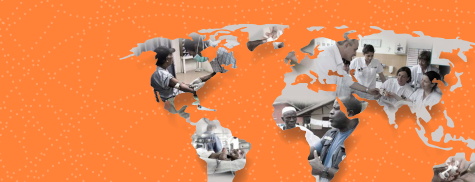
Guidelines on Core Components of Infection Prevention and Control Programmes at the National and Acute Health Care Facility Level
Health care-associated infections (HAI) are one of the most common adverse events in care delivery and a major public health problem with an impact on morbidity, mortality and quality of life. At any one time, up to 7% of patients in developed and 10% in developing countries will acquire at least one HAI. These infections also present a significant economic burden at the societal level. However, a large percentage of HAI are preventable through effective infection prevention and control (IPC) measures.
12 May 2025
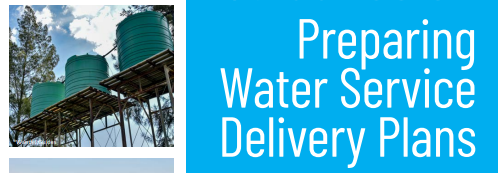
Guidance on preparing Water Service Delivery Plans
This manual is a guide on how to prepare a service delivery plan for small to medium-sized water utilities (supplying approximately 5,000 to more than 100,000 customers) in Africa and similar settings. It is intended for utilities operating in limited resource settings, and/or working with limited data and information. It is a useful reference for utilities embarking on developing their first water service delivery plan, and for those intending to improve their existing service delivery planning. This type of plan identifies the actions required and associated costs for achieving a defined level of water service delivery over a defined period.
01 Jan 2025
MOLE Conference Evaluation Final Draft Report 30.11.24
CONIWAS periodically assesses the contribution of the Mole Conference Series. This year marks the 35th anniversary of the Conference Series, and CONIWAS sought to evaluate its impact on the WASH sector. The evaluation focuses on measuring the contributions of the Mole Conference, its relevance to the sector, and identifying any gaps that need to be addressed to enhance its effectiveness.
02 Dec 2024
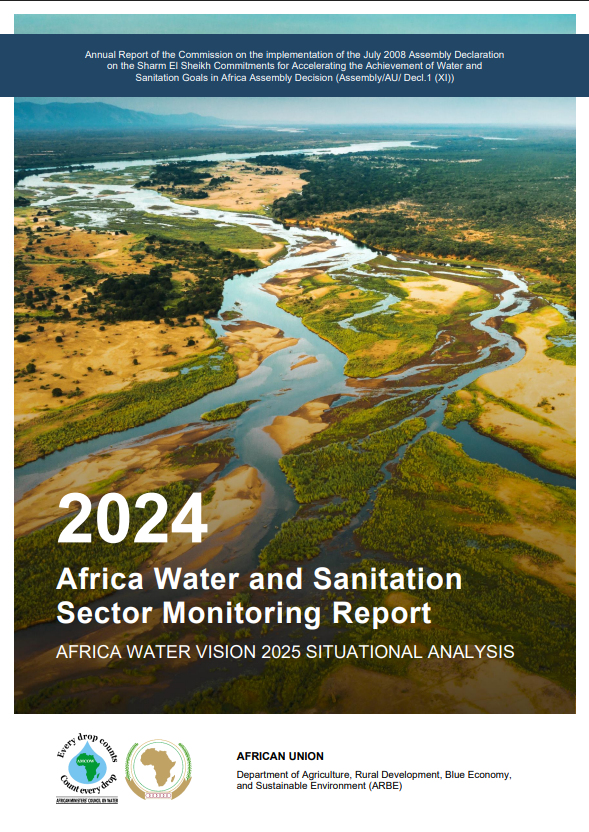
EN-2024-African-Water-and-Sanitation-Sector-Monitoring-Report
The report of the Commission on implementing the July 2008 Sharm El Sheikh Declaration (Assembly/AU/ Decl.1 (XI)) captures Africa’s progress towards water and sanitation goals under the Sharm El Sheikh Commitments (2008), Africa Water Vision 2025 (AWV2025), and Sustainable Development Goal 6 (SDG-6). This 2024 edition of the report focuses on Africa’s 25-year efforts to actualise the vision
16 Oct 2024

Guidelines for drinking-water quality - Small water supplies
Providing access to safe and adequate drinking-water services is one of the most effective means to promote health and reduce poverty, and small water supplies have an essential role to play in meeting this need. For a significant proportion of the global population, drinking-water comes from small supplies that range from individual household wells to piped supplies serving entire communities. More than 40% of the global population lives in rural areas, which are commonly served by small supplies. People living in small towns, peri-urban areas and urban areas may also rely on small water supplies.
13 Sep 2024
Women in Water
During the International Water Association (IWA) World Water Congress and Exhibition held in Tokyo in 2018, the IWA Specialist Group on Sustainability in the Water Sector organized a workshop focused on staff training, knowledge management, and organizational culture issues. After the final facilitated discussion session, two shy young women walked up to one of the discussion moderators to express appreciation for the information the workshop had provided.
03 Mar 2024
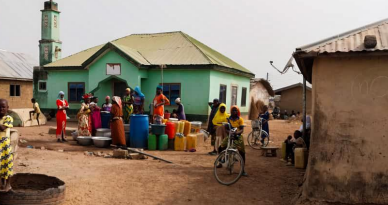
EMERGING TRENDS IN RURAL WATER MANAGEMENT 2023
This report synthesizes a desk review of emerging trends in rural water services delivery, with a focus on 12 countries (Ghana, India, Kenya, Mali, Mozambique, Peru, Rwanda, Senegal, Tanzania, the Philippines, Uganda, and Zambia), drawn from the United States Agency for International Development’s (USAID) 2021 list of high priority, priority, and strategically aligned countries. It also maps water service delivery across an array of categories (including institutional and legal arrangements, regulation, monitoring, technical capacities, and financial capacities) and reports on an E-survey conducted among 400 respondents in the rural water supply sector.
05 Sep 2023
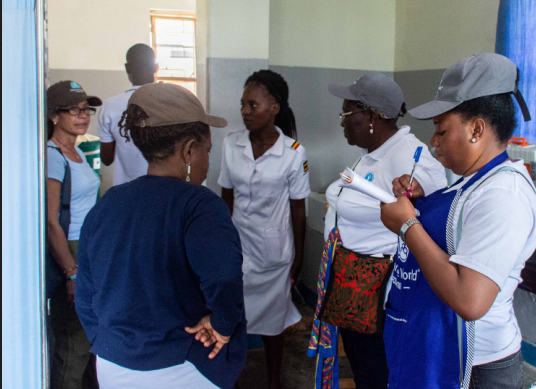
WASH-in-Healthcare Facilities TRAINER’S GUIDE
The WASH Foundation is a USA-registered 501(c)3 not-for-profit organization. Our programmatic focus is on improving access to adequate safe water, sanitation, and hygiene resources and services through WASH-in-Schools, including menstrual hygiene management and WASH-in-Healthcare Facilities
05 Jul 2023
SDG 6 Country Acceleration Case Studies 2023
Ghana is a medium-sized country located in Western Africa. More than half of its 30 million inhabitants live in urban areas (Table 1). The country has a Gross Domestic Product based on purchase power parity of 5,971 United States dollars (USD) per capita, which is higher than the average for the region. This positions Ghana among lower middle-income countries. The country is a parliamentary democracy with an executive presidency. The government is elected every four years by universal suffrage. The President of the Republic is also the Head of Government. Two major parties have been alternating in power since 1992. The country is divided into sixteen administrative regions.
05 May 2023