WASH Publications

National Drinking Water Quality Management Framework for Ghana
The Ministry of Water Resources, Works and Housing (MWRWH) recognizes access to safe drinking-water as basic human right and essential to protect public health. In the recent decade significant progress has been made to raise the proportion of population with access to improved water sources in the country. However, research studies and national surveys found a number of drinking water quality parameters do not conform the national water quality standards. In addition, water related diseases are also prevalent in the country which is a threat to public health. In recognition of the importance of safe drinking water to public health, the MWRWH with the support of UNICEF has carried out a detail assessment of the existing drinking-water quality management system. The objective was to identify the challenges and gaps in the existing water quality management system and make recommendations to address those challenges
12 Jun 2015

National Drinking Water Quality Management Framework for Ghana
The Ministry of Water Resources, Works and Housing (MWRWH) recognizes access to safe drinking-water as basic human right and essential to protect public health. In the recent decade significant progress has been made to raise the proportion of population with access to improved water sources in the country. However, research studies and national surveys found a number of drinking water quality parameters do not conform the national water quality standards. In addition, water related diseases are also prevalent in the country which is a threat to public health. In recognition of the importance of safe drinking water to public health, the MWRWH with the support of UNICEF has carried out a detail assessment of the existing drinking-water quality management system. The objective was to identify the challenges and gaps in the existing water quality management system and make recommendations to address those challenges
12 Jun 2015
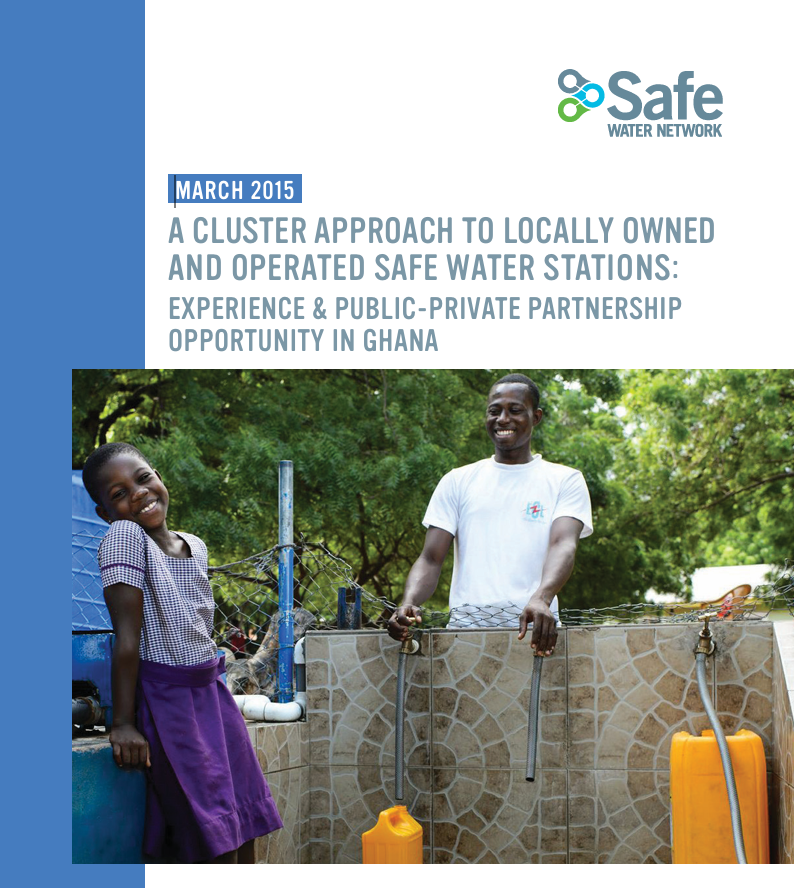
A CLUSTER APPROACH TO LOCALLY OWNED AND OPERATED SAFE WATER STATIONS: EXPERIENCE & PUBLIC-PRIVATE PARTNERSHIP OPPORTUNITY IN GHANA
This note offers context to Ghana’s public-private partnership (PPP) environment and infrastructure situation, and presents a prospective case study illustrating the potential of structuring a PPP around a cluster of water stations in rural communities and small towns in Ghana. The preliminary financial analysis will assist us in understanding the incentives for the public and private sectors as a means of achieving local sustainability for community water systems.
22 Mar 2015
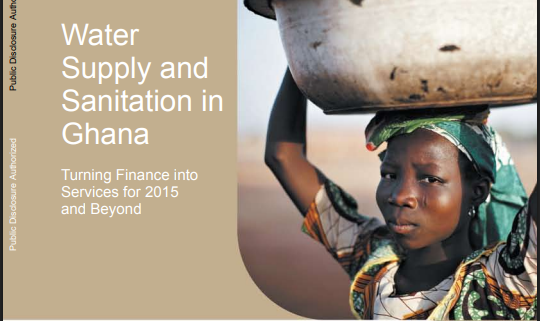
Water Supply and Sanitation in Ghana
The African Ministers Council on Water (AMCOW) commissioned the production of a second round of Country Status Overviews (CSOs) to better understand what underpins progress in water supply and sanitation and what its member governments can do to accelerate that progress across countries in Sub-Saharan Africa (SSA). The African Ministers’ Council on Water (AMCOW) delegated this task to the World Bank’s Water and Sanitation Program and the African Development Bank who are implementing it in close partnership with UNICEF and WHO in over 30 countries across SSA. This CSO2 report has been produced in collaboration with the Government of Ghana and other stakeholders during 2009/10.
13 Feb 2015
District Scale Up Plan Guidelines 25th December 2014
This District Scale Up Plan is an appendix to the District Environmental Sanitation Strategy and Action Plan (DESSAP) and is intended to support Metropolitan, Municipal and District Assemblies (MMDAs) and their relevant departments responsible for basic sanitation in planning to accelerate progress towards eradicating the practice of open defecation and achieving sustainable basic sanitation access for all.
24 Dec 2014
TRAINING MANUAL Basic SANITATION BUSINESS
The document presents training materials to facilitate scaling up of rural sanitation in Ghana. It is based on an original manual developed for Sanitation Businesses titled “Start Your Sanitation Business” by Natalia Agathou, WASTE, advisers on urban environment and development, Gouda, the Netherlands. M.
29 Jun 2014
NCWSP - PROJECT IMPLEMENTATION MANUAL
The Government of Ghana has, over the years, pursued various policy reforms and enacted a number of Acts of Parliament, which have impacted the water sector.
05 Mar 2014
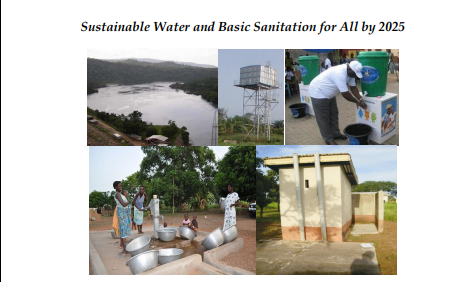
WATER SECTOR STRATEGIC DEVELOPMENT PLAN (2012-2025)
This Sector Strategic Development Plan (WSSDP) has been prepared by the Ministry of Water Resources, Works and Housing (MWRWH) for the water sector as part of the key activities in the implementation of the road map towards a Sector Wide Approach (SWAp) in Ghana’s water sector. The plan seeks to facilitate the achievement of the sector’s objectives as captured in the National Water Policy and Ghana Shared Growth and Development Agenda (GSGDA, 2010-2013).
05 Mar 2014
National Community Water and Sanitation Strategy (NCWSS).
Ghana’s National Water Policy (NWP), 2007, provides a framework for the sustainable development of Ghana's water resources.
01 Mar 2014
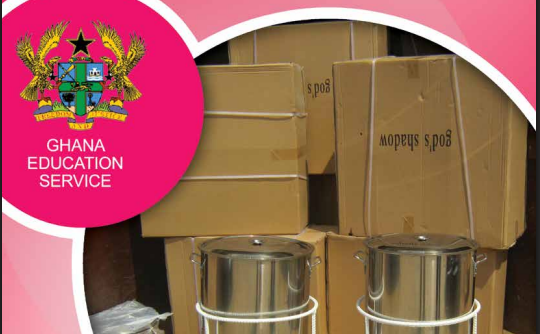
WASH IN SCHOOLS Facilities Planning and Management Guide
Provision of sustainable school WASH facilities is critical for the health and well-being of school children in Ghana. The guide provides the key stakeholders at all levels and the roles and their responsibilities from the planning stage, through selection of feasible WASH options, design, construction as well as the operation and maintenance of the facilities provided to ensure long term sustainability. This falls in line with the School Health Education Programme (SHEP) of the Ghana Education Service (GES).
08 Jan 2014
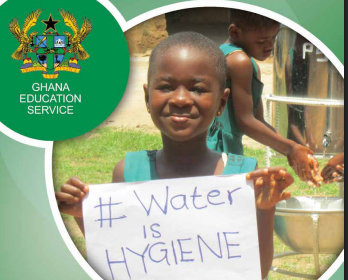
Ghana Education Service WASH in Schools National Implementation Model
WASH in Schools (WinS) in Ghana has been delivered as part of traditional water, sanitation and hygiene promotion projects in communities.
03 Jan 2014
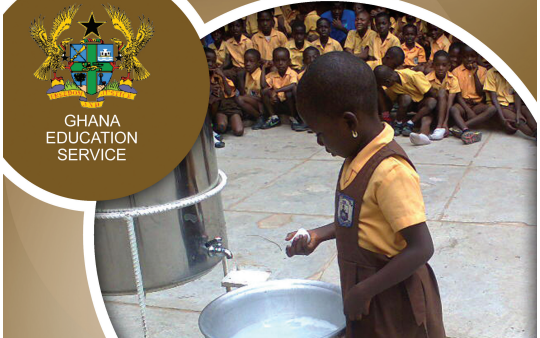
Ghana Education Service WASH In Schools Education Guide.
With the aim to contribute to the implementation of the Child Friendly Schools (CFS) Framework developed by GES, the WASH Education guide is developed as a ready to use guide for planners, coordinators and school authorities to promote WASH education in schools in addition to hygiene education topics already integrated into the education curriculum in Ghana.
01 Jan 2014