WASH Publications
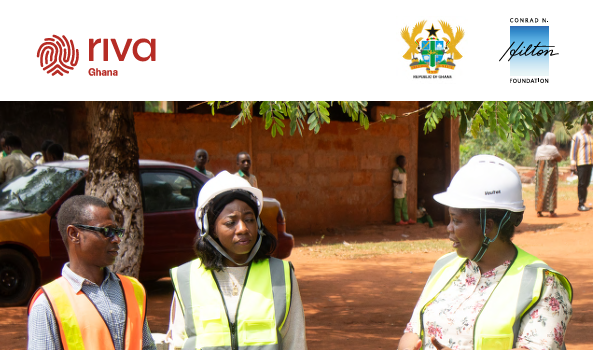
Operations and Maintenance (O&M) Framework for Rural and Small-Town Water Supply Systems in the Ahafo Region
The Framework was developed through a consultative process involving desk review, stakeholder interviews, and field consultations to ensure that it reflects both sector evidence and implementation realities.
21 Sep 2026

Study on formalising relationships between CWSA, private operators, WSMTs and other actors
Access to water supply in rural communities and small towns in Ghana has risen from 27% in 1990 to 62% in 2022, while contributing to improvement in water-related sanitation and hygiene. However, the programme was fraught with significant challenges.
25 Feb 2026
GLAS 2025
This summary presents the key findings from the UN-Water Global Analysis and Assessment of Sanitation and Drinking-Water (GLAAS) 2025 report. It highlights the current state of drinking-water, sanitation and hygiene (WASH) systems, shares examples where there are signs of progress, identifies critical gaps and points towards areas where greater efforts can bolster implementation and performance to achieve national WASH policy goals and targets.
05 Feb 2026
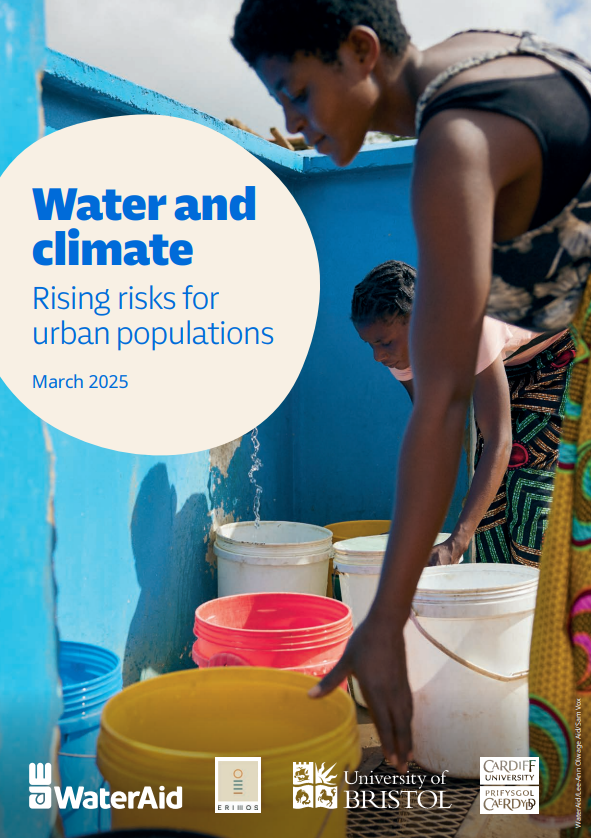
Water and Climate (Rising risks for urban populations) compressed compressed
Water is vital to a city’s growth and stability and is the backbone to healthy societies, yet the threat of too much or too little water puts everything at risk.
06 May 2025
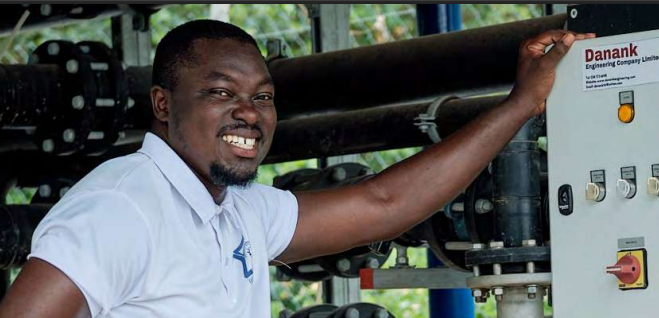
Professionalising water services in the rural water sub-sector of Ghana
In the heart of rural Ghana, the Community Water and Sanitation Agency (CWSA) has been championing the development and management of essential water infrastructure in rural areas and small towns since 1998. Established by the CWSA Act of 1998 (Act 564), the agency’s mandate is to facilitate the provision of safe water and related sanitation services to rural communities and small towns, coordinating all stakeholders and interventions under the direction of the National Community Water and Sanitation Programme (NCWSP)
07 Apr 2025
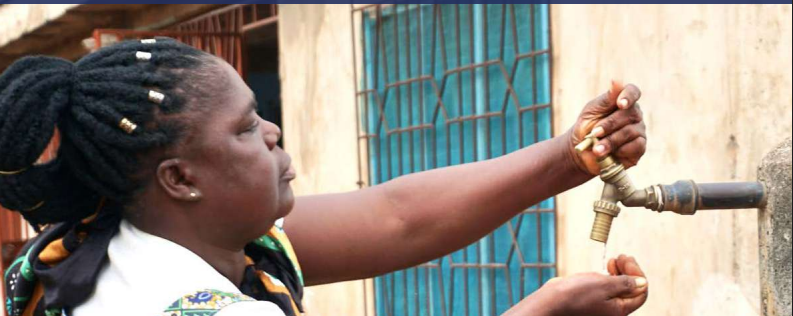
Rural Water Utilitisation Project; State of water services in the Western Region
The “Rural Water Utilitisation Project” (R-WUP) funded by the Conrad N. Hilton Foundation in Ghana, aims to expand the activities of the Community Water and Sanitation Agency (CWSA) as the leading public sector agency in rural Water, Sanitation and Hygiene (WASH) within the sub-sector. The objective is to facilitate the provision of safe water to Rural Communities and Small Towns through a decentralised Service Delivery Approach. To achieve this objective, CWSA in 2017, initiated a policy reform, to expand its mandate to include the management of piped water systems in rural areas, and thus, in effect become a rural utility
04 Mar 2025
Ghana Presidential WASH Compact 2024
Sanitation and Water for ALL, has a Global Framework of Action, and is an international partnership of national governments, donors, civil society organisations and other development partners working together to galvanise political commitments to increase global access to sanitation and water. SWA aims to raise the performance and effectiveness of the water and sanitation sector by working to enhance mutual accountability.
24 Nov 2024
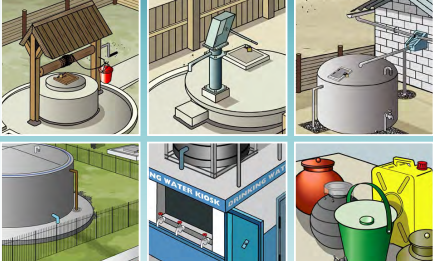
Sanitary inspection packages
Improving the safe management and performance of small water supplies represents a neglected but important opportunity to make significant contributions to public health and well-being, address inequalities and improve livelihoods. The World Health Organization (WHO) has developed the 2024 Guidelines for drinking-water quality: small water supplies (or GDWQ: small water supplies) to address the needs and opportunities associated with small supplies, and to facilitate progress towards safe and sustainable drinking-water services for all. The GDWQ: small water supplies provides recommendations and guidance for decision-makers at national and subnational levels who have responsibilities for developing and implementing drinking-water quality regulatory frameworks and associated programmes. It presents proven good practices, including proactive risk management. As highlighted in the GDWQ: small water supplies, sanitary inspections play an important role in supporting proactive risk management.
21 Oct 2024
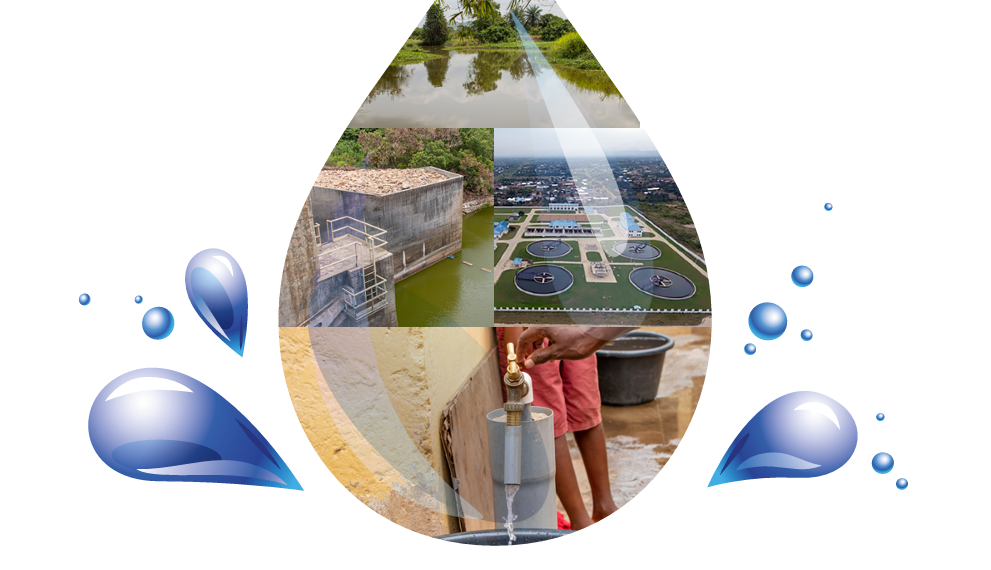
National Water Policy, 2024
Water is key to the existence, growth and development of all living things on earth. Access to safe water and the sustainable management of water resources is essential to all aspects of human life as it directly impacts food production, health outcomes, including child morbidity and mortality, sanitation and hygiene as well as the development of women and girls. It is no wonder that water is linked to the attainment of all the Sustainable Development Goals (SDGs). Aside from sustaining human livelihood, water is also essential to industrial development, manufacturing, transportation, tourism and energy.
14 May 2024
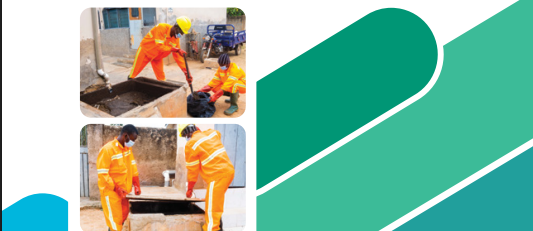
MANUAL FOR EMPTYING BIODIGESTER TOILETS
Globally a huge number of people rely, for their sanitation, on non-sewered or onsite systems, which generate a mix of solid and liquid wastes generally termed faecal sludge. Faecal sludge (FS) is the general term given to undigested and partially digested slurry or solids resulting from storage or treatment of blackwater or excreta. In lowincome urban communities and rapidly expanding cities, faecal sludge represents a growing challenge, generating significant adverse public health and environmental risks. Without proper management, faecal sludge is often allowed to accumulate in poorly designed pits, is discharged into storm drains and open water bodies, or is dumped into waterways, wastelands, and unsanitary landfill sites. Only a small percentage of faecal sludge is managed and treated appropriately.
14 May 2023
Ghana WASH Sector Development Programme, 2021-2030
This document presents the following information: an overview of Ghana’s WASH status; key actors and their respective roles and responsibilities; the policy, institutional, and legal framework; and the key challenges confronting sector performance. In addition, summaries of priority actions necessary to resolve key challenges in the sector are provided. This programme document serves as both an information pack and a guide on how to transform the WASH sector to achieve common national and international targets by 2030.
03 Jan 2023
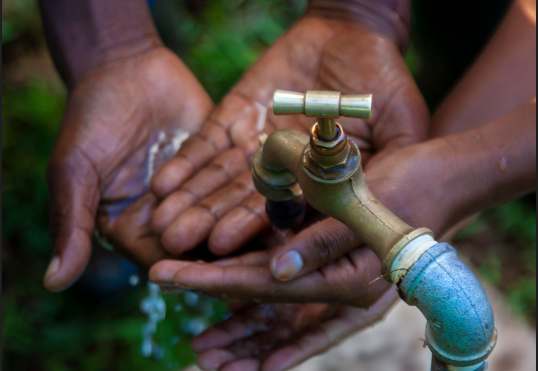
AMCOW YoGI - STRATEGY FOR THE WATER AND SANITATION SECTOR IN AFRICA (2023-2030)
This Youth and Gender Inclusion (YoGI) Strategy for 2023-2030 is the realization of CrossCutting Priority IV of the African Minister’s Council on Water (AMCOW) Strategy (2018-2030) on, “Strengthening Gender Equality and Youth Empowerment in Water and Sanitation”. The strategy “recognizes the invaluable role of Africa’s women and youth in the water and sanitation sector.” It aims to empower, enable equitable access and eliminate the major obstacles to the inclusion of youth and women, as it acknowledges their contributions in the water and sanitation sector. These contributions include “their leadership, capacity for creativity and innovation, dedication, and energy, and ability to raise awareness and change behavior.” Global and regional commitments also call for equitable access as well as the reduction of inequalities in services for populations and groups that include young people, women, people with disabilities (PWDs) and other marginalized and vulnerable groups in the water and sanitation sector.
01 Jan 2023